Box stores like Costco, Sam’s Club and BJ’s have expanded dramatically in the past twenty and more years. At these stores, customers buy in bulk and gain savings over regular retail stores through volume discounts.
This provides a huge advantage to customers who have the financial ability to load up and have the space at home to store what they have purchased.
The cumulative saving over the course of a year easily pays for the price of annual “membership” in the “club.” The average amount paid at the cashier, the total cheque, is often twice or more what one would pay at a regular supermarket at a single purchase occasion, but well worth it to those with larger families or with the space to store 12 cans of Marzano tomatoes when really they needed just one.
If a customer can absorb the cost of building this household inventory, there are significant savings. With the increasing size of the average house outside of inner-city cores, there is room in North American homes for the transfer of product inventory from merchant to end user. The pressure on personal time also means having household inventory provides immediate product access without having to make a trip to a store to purchase an item, reducing the frequency of visiting a store.
Rarely does a purchase at a box store result in immediate use up the way purchases thirty or fifty years ago would have meant using the entire purchase in a week or less. (I make an exception for the 1.3 kilo M&Ms jars which can evaporate in a day or so).
Product advertising has not recognized this immense wave of change. Instead of advertising for purchase, advertisers should also be looking at providing use ideas and reminders to use product on hand. It is only when product on hand is used that more purchases are made. Speeding up usage, shortens the purchase cycle (the period of time between product purchases).
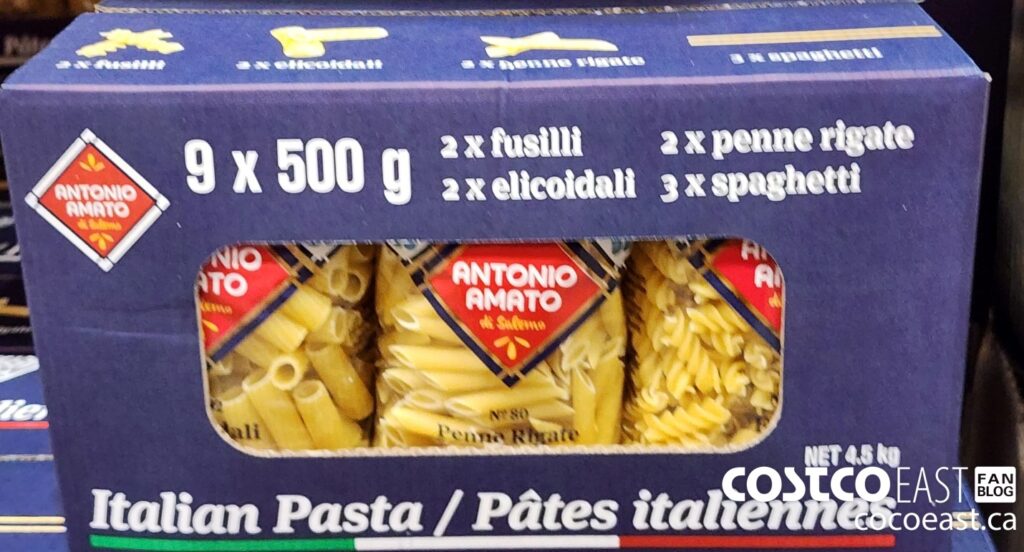
The packaged goods marketers addressed this problem earlier when sales promotions featured BOGOs (Buy One Get One) or 3 or 4 products at a special discounted price. We called it “Pantry Loading” based on a strategy that consumer who had product on the shelf, would use it up. To encourage use up, we used motivators like quick and easy recipes as referenced in an early post.
The rise of box stores has moved pantry loading back to the forefront and on a whole new larger level. Customers routinely purchase four or six packages of product or very large packages to gain the volume discounts. Manufacturers pack special “club sized” versions of regular products. All of this equals massive pantry loading.
Social media is a great way to increase frequency of product use by inexpensively providing easy ideas to consumers to use product on hand, even in innovative ways. When you buy a four pack of baking soda at Costco, you can use some to get carpets cleaner, have fresher smelling clothes in your laundry, and so forth in addition to a tablespoon in your baking recipe. Scattering it on your carpet uses up many times more than a tablespoon in your banana bread. Many of these usage ideas were used in print ads, but now they can be better targeted and distributed at a much lower cost.
Additional uses are less expensive than bounce-back coupons and provide more enduring value.
It requires some thinking out of the box by marketers to find additional uses and then execute communication against those ideas. But not a lot.
We rarely see on-line advertising ideas for product use up. Messaging is almost all trial oriented.
In the packaged goods era, some of the alternative uses sometimes became so mainstream that they were the source of significant product growth: using breakfast cereals to make marshmallow snacking squares, adding Dream Whip to cake recipes to make cakes rise, putting chiles on hamburgers, These are just some ideas that I was involved with which resulted in considerable brand volume, not just for use up but also as motivators in initiating purchases. I referred to a few in Overcome AD-versity.
One of the best marketing ideas I know is the instruction on the side of a shampoo bottle that suggested hair will be even more beautiful with a second washing with the shampoo. That little idea could generate twice the use up.
These types of ideas are not the award winners; they are the volume creators. With stores like Costco building up consumer in home inventory, there is potential to create a lot of volume for packaged products with simple ideas that help consumers find an interesting way to use the fourth jar of pasta sauce that came in the box – before its best-by date.
Product use up creates the need to repurchase. Having more than potential one use adds some value to each purchase as well.
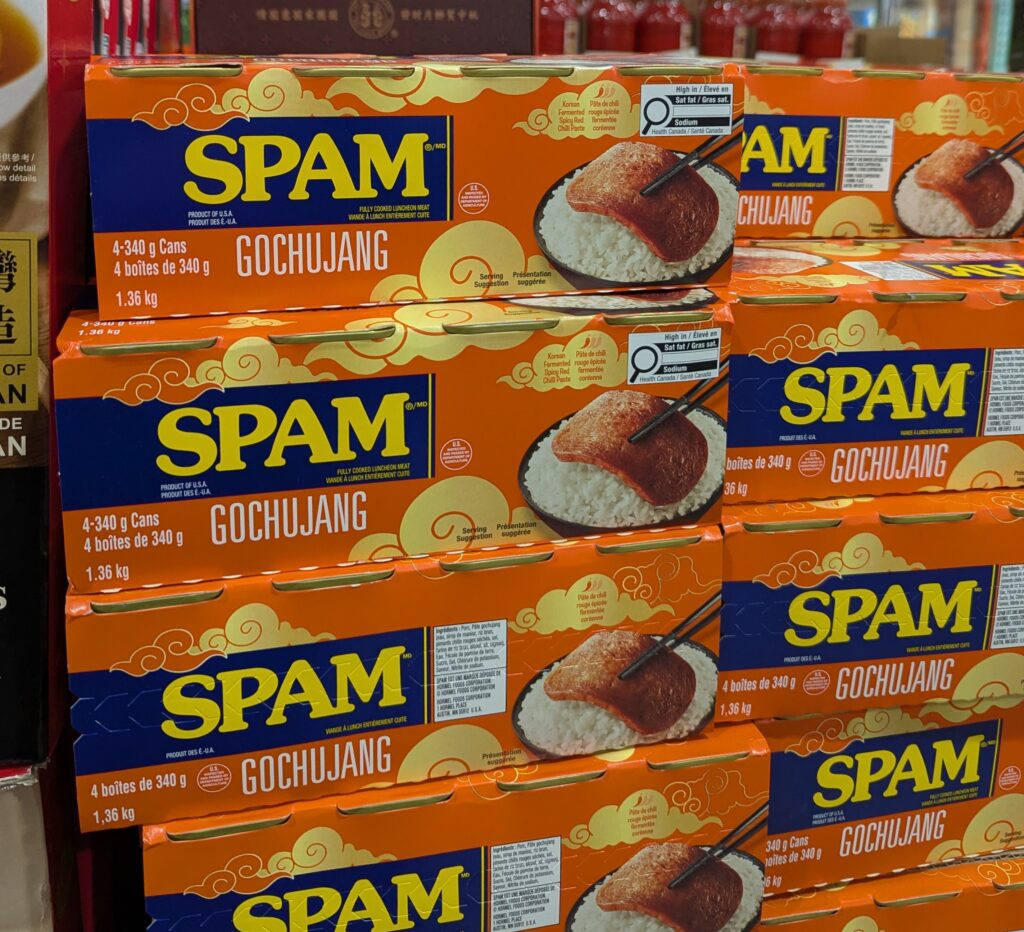
If advertisers provide no additional ideas for use, like Spam musubi, then consumers may discover that fourth tin of out of date Spam on their shelf and swear not to buy it at Costco again.
If you liked this, read more at Calexis.com