While in Venezuela, we received an introduction to make an advertising pitch to a lard company called Mavesa (Manteca Venezolana S.A. – which translates to the Venezuelan Lard company). Their principal products were lard, margarine, and edible oils.
They also sold mayonnaise, but sales were not doing well. Mayonesa Mavesa was 5th in share behind category leader, Kraft. We had the opportunity to do an advertising presentation on ways to improve sales. The mayonnaise had not been advertised previously.
The strategy we developed was to show Mavesa mayonnaise as superior tasting because it contained more eggs. The proof was that Mavesa was thicker due to those eggs.
We worked out a TV commercial featuring a spokesperson we created who was passionate about the product. She would interrupt, even people she didn’t know, to explain how good it was. She was everybody’s busybody aunt who sticks her nose into other people’s business.
Our copywriter, Idania, developed a slogan: “Un poquito más espesa, un pocote más sabrosa” – a little bit thicker, a whole lot tastier.
To help explain our thinking to the prospective clients and make our spokesperson seem more real, we created a personal history for her. Our Art Director drew an illustration of her as a matronly lady with half glasses wearing a traditional, unfashionable house dress. We named her, Doña Teresa Oropeza, to rhyme with Mayonesa Mavesa and make her more memorable.
Our prototype commercial had Doña Teresa interrupt a young mother shopping in a supermarket. Doña Teresa butts in to help the young woman choose the right mayonnaise. She demonstrates Mavesa’s superiority, showing how it is thicker than Kraft. She does this by sticking spoons into two open jars of mayonnaise, side by side. The spoon in the Mavesa jar stands up, while Kraft’s spoon droops over.
We were ready for our pitch. It was the first full speculative pitch for me where we presented a creative idea fully fleshed out so I was very nervous.
We presented to two senior executives from Mavesa, Alberto Phelps and Jonathan Coles. Alberto, the President, did not speak much English and had recently recovered from throat cancer. Jonathan, Mavesa’s Controller and Venezuela’s champion golfer for many years, was bilingual and of US descent. Jonathan had gone to Yale. His godfather was Nelson Rockefeller. Jonathan later became CEO of Mavesa and a little later Minister of Agriculture for Venezuela.
We presented our advertising idea to Srs. Phelps and Coles. Showing the portrait we had created, explaining Doña Teresa, talking through the TV commercial script. It seemed to go well. We answered a few small questions as we went along and waited for their response.
Sr. Phelps conferred with Sr. Coles, partly because Sr. Phelps was hard for us to understand. He had to burp out his words due to the throat cancer problem. Finally, Jonathan said “Mr. Phelps has two questions for you. First is what do you think about recipes?”
We liked recipes since they gave consumers more reasons to use the product. If we wanted to provide consumers with recipes, we suggested we could even put them in booklets attached to the jars. Sr. Phelps nodded agreement, smiled and said his wife would like that.
“Sr. Phelps’ second question is: if this woman is such a big fan of our mayonnaise, why has Sr. Phelps not heard from her before?”
That one took a moment for a response. No one in Venezuela had created their own advertising spokesperson before, just invented one out of thin air. I explained that she didn’t exist. By creating her ourselves, we could model her to explain all the sales points we wanted, even recipes.
“Mmmm,” he mused, “Can you even do that?”
“Yes, we can,” I added, sliding in a plug “if we are handling the account for you!” They thanked us for our presentation, and they left. We congratulated each other and felt we had done very well in our grand performance in the theatre of “the pitch.”
And then we heard nothing.
A week passed.
When as the next week started, I asked our President, if I should call to see if they had made a decision on who would be their agency. He argued for restraint; he did not think we should be too pushy; it was not the Venezuelan way. As more days passed without hearing anything, I asked again, finally our President relented and allowed that a soft inquiry from me might not be a bad idea.
I called Jonathan. I asked him how he was doing, and his first response was an excited “is the commercial completed already?”
I told him we would not produce any commercial without their approval of the copy and approval of the cost estimate. I told him we were not sure we had won the account.
“Sure, you did,” he said enthusiastically. “If those were the only questions Sr. Phelps had, everything was approved.” And with that we started work.
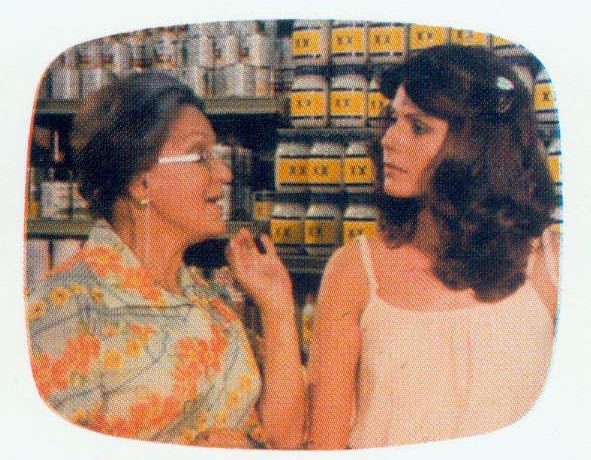
We had casting to do, film production to bid and estimate, commercial to shoot, media to arrange. We suggested a Day After Recall test to make sure the commercial was memorable; they agreed. It scored higher than anything tested before by the research company, which was really surprising – it featured no catchy music, no girls in bikinis, no handsome guys – the staples of Venezuelan TV. It starred a matronly, busybody, middle aged lady in a housedress interrupting a young mom about her choice in mayonnaise. Go figure. What it did have was a story line that no one had heard before, with a clear graphic demonstration of that story.
The campaign was delayed slightly so that Mavesa could standardize their mayonnaise production recipe to ensure it was, in fact, consistently thicker. Without a consistent product, our claim would have meant nothing. Making a product the same each time is a basic requirement for any claim. Consistency is the basis of all branding. Consumers buy a brand because they expect the product to be the same each time. (excuse the puns, because thicker consistency was our sales point). Once we got on the air, sales immediately responded.
We soon started producing pool outs, additional stories of Doña Teresa, including some with recipes.
One recipe was for a “sanduchon”, a party sized Venezuela sandwich made like a layer cake. It is a loaf of square shaped bread, sliced horizontally, then each layer is spread with various ingredients, a different one between each layer, including deviled ham, cheese, chicken salad with mayonnaise, and so on. The completed sanduchon is then frosted with mayonnaise and decorated with olives and pimentos. The recipe used a lot of mayonnaise and was quite a popular party dish in the country.
A year and a half later, Mavesa was #2 in the market and pushing Kraft for top spot. Our Doña Teresa character had become a staple in skits on TV comedy shows, Doña Teresa nosing into people’s conversations with her advice – everyone’s busybody aunt.
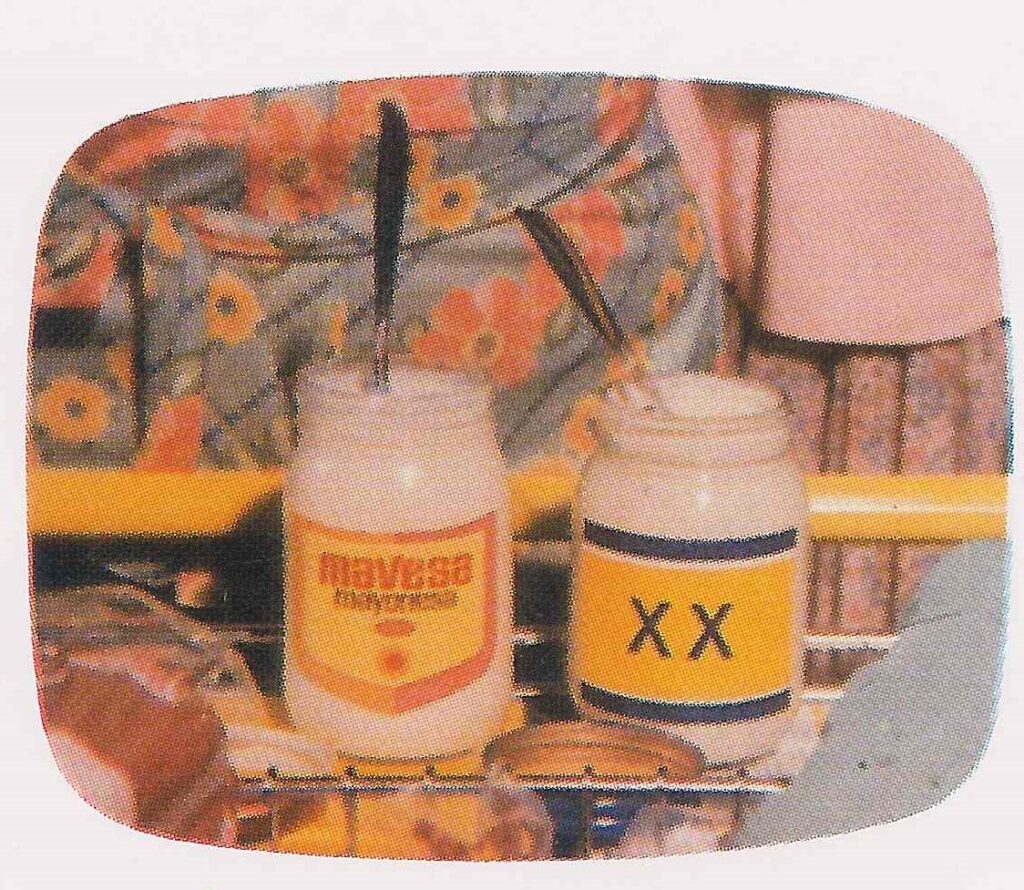
Let us be our own skeptic for a minute. Where is the logic? The simplicity of the visual spoon demo and how it demonstrates a product difference made Mavesa Mayonnaise seem superior to most consumers.
Does it really demonstrate better taste? We rationalized that it did. But it doesn’t really. It shows thickness. Thickness can speak to quality but not to taste.
And what about having two open jars of product in a supermarket? How could that happen? Where did the spoons come from? It was suspension of disbelief by the viewer. I will not even get into the Spanish double meanings of one spoon staying erect. The word for spoon can mean something completely different than spoon in colloquial Venezuelan. The saying “having more eggs” is also a double entendre meaning a lot of nerve.
Taste superiority is a subjective thing. It is not as easily or visually demonstrated by physical differences. Every commercial included the mayonnaise product going into a mouth, followed by a positive expression to confirm the good taste. If we had surveyed the market before our advertising, thickness would not have come up as an important benefit. But it soon became one. This is a good example of the narcissism of small differences and how advertising magnifies them.
The demonstration did show a dramatic product difference. After telling people that it showed superior taste, people believed that is what it proved. No one parses the logic to know otherwise. People do not overthink what they are told. These purchase decisions are made with the fast brain which is not necessarily logical. This is outlined in Overcome AD-versity when differentiating between thinking fast, and slow.
An ad is just a glimpse, a blink. People usually just believe what you tell them, even more so if you show them some proof. Visual proof is quicker to understand and more convincing than any explanation in words. The erect spoon was obviously superior.
If you liked this, read more at Calexis.com