As a teenage student, I wasn’t sure what I wanted to do. I was channeled into Math because I was good at it. After one year of Honours Math, I realized it was not what I wanted to do with my life. I wasn’t inspired by it, like I had been in high school.
One thing I did know was that I needed a job for the summer to pay for university, no matter what I was going to study. I searched around. With the help of my brother-in-law who was studying geology, I found a mining company, Anaconda American Brass, that was looking for helpers in exploration. I went to their office and applied. Anaconda was the worlds largest producer of copper with mines in Canada, Montana, and Chile.
Like most kids in the area, I had spent quite a bit of time camping and in the woods. I wasn’t a geology student, but my brother-in-law gave me some tips. Against the odds, I got lucky and landed the job.
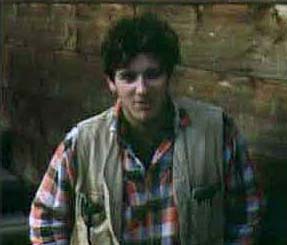
Before exploration season, I used my researching abilities to spend a couple of weeks researching claims in our target area of Endako, BC. There had been a large molybdenum find nearby and that discovery was becoming a mine.
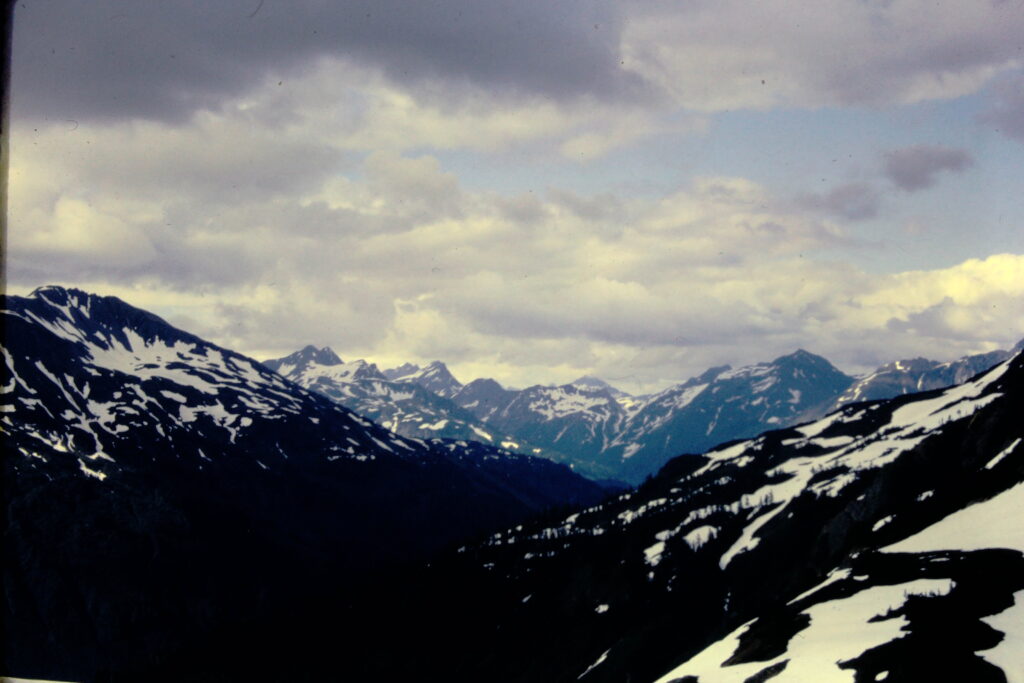
After a month in Endako, we would head west to Prince Rupert by train, then fly north to the Alaska panhandle to explore the Endicott River valley between Juneau and Skagway.
I obtained a Free Miner’s License. The qualification for the license were to pay the fee and have a pulse. The Certificate permitted you to wander through the vast BC wilderness and to stake claims. I received some metal claim plaques to use in staking claims.
To stake a claim, you were required to create markers on the corners, as possible, either with cut posts or cairns. Cutting posts was the easiest. A correctly sized tree was located, topped off at around 4 feet, then the post or stake was rough squared with an axe and the metal plaque was signed and affixed to the stake. And, voila, the claim was staked. If you ever wondered what staking a claim really meant, here you go.
Once staked, you simply had to register the location and the metal tag number with the government and you had mineral rights to the location down to the centre of the earth,
In addition to researching claim ownership and mapping it, I showed I was able to read a contour map. Virtually overnight I learned enough to join a prospecting crew.
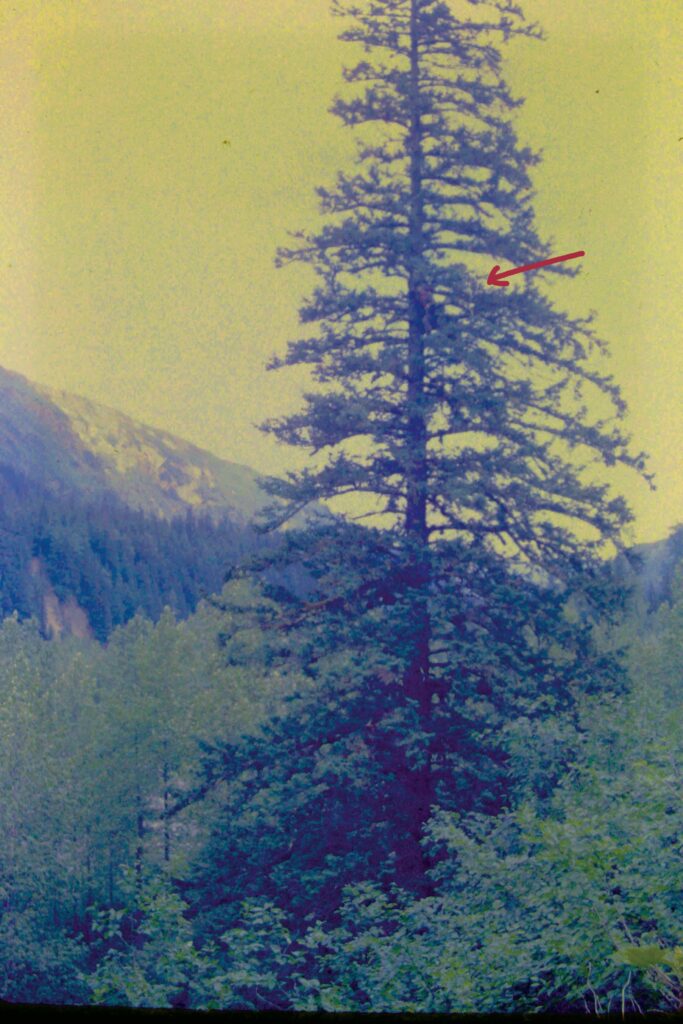
I was paired with an experienced prospector, an Austrian mountain climber named John Kozic. A quiet confident guy who really knew the mountains and loved climbing. He also knew enough to make me climb 50 meters up that tree to hang the radio antenna (see red arrow up the tree). And one day he jumped, ran over to stop me and save my life after I tumbled uncontrollably down a talus slope towards the top of a cliff.
We had a crew of five and a half. There were two teams; the other team was a doctoral student from the Colorado School of Mines, Delmer Brown, with a young geology student from North Dakota, Chris Twomey, as his assistant. We also had a cook, Jimmy. In addition, we were joined about halfway through the summer by Dr. Ian Bain, a Professor of Geology. It was a mixed crew of Canadians and US.
Because we were working in the US, the job required we Canadians have a US social security card, which was useful to me later.
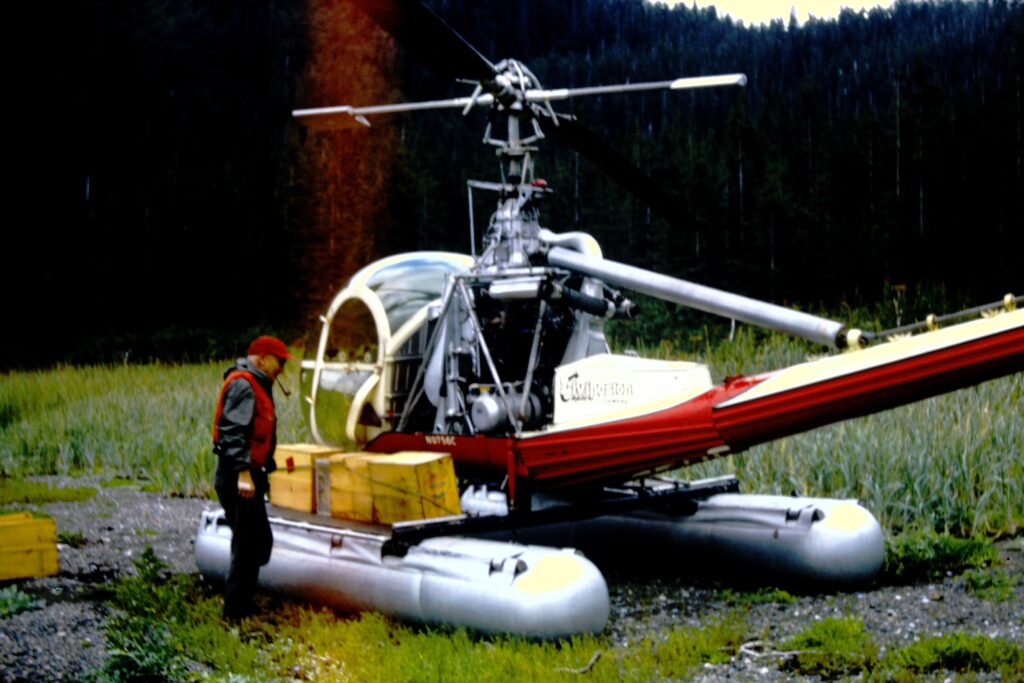
The Endicott River valley was just over the mountains east of Glacier Bay which would become one of the major stops for Alaskan cruise ships. There had been gold claims staked in the river valley years before, but they had been abandoned for decades. We were looking for copper, silver or molybdenum, but gold was okay too.
It was an eventful summer with many firsts: helicopter ride, train trip, summer in the woods, face to face with a grizzly bear, falling off a cliff, stepping into quicksand up to my armpits, almost drowning in the middle of a glacial river, shooting a revolver, finding a remote camp alone in the woods without a map, and many other adventures.
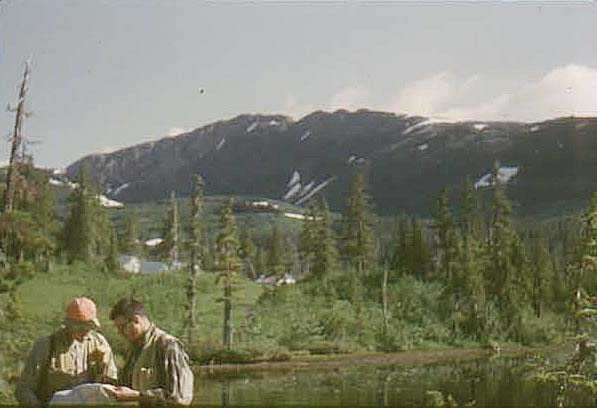
This was the start in my international career. It was also the start of a prospecting career that switched from prospecting geology to prospecting for other opportunities. An exploration mentality became part of my operating system.
In addition, I learned a lot about self reliance, resourcefulness, problem solving, mortal challenges and survival against the odds. All this on an accidental job choice by a teenager supposedly studying math.
I often tell young people that opportunities present themselves in many weird ways and not always as you might expect. But opporui87=tunities build confidence and open doors for you. Take on risks. Every opportunity adds to your value, and they accumulate so stay curious and keep learning.
Those opportunities may not even be recognized when they come, The true benefits of these experiences may not become visible for years.
In this case, my time in Alaska and then in Northern BC, was critical in helping me get my first full time job, on Madison Avenue in New York. Go figure. It made my resume stand out and seem unique compared to other candidates and allowed me to talk about the kinds of skills and attitudes I learned as a prospector – resourcefulness, problem solving, addressing problems and more, with interesting stories to use as demonstrations of these to make them relevant to those doing the hiring.
We are all the result of our experiences. The more experiences you are open to having, the greater the cumulative effect will be. Thars gold in them thar experiences!
If you liked this, read more at Calexis.com