We are in a rapidly evolving time for languages. There are so many new concepts entering our lives, mostly through technology but also through immigration, that we are having to come up with new words and sayings all the time – LOL. IMHO
When your BFF sends you a text, there are whole new spelling protocols. U R talking in a new dialect and the changes are happening fast.
English is an excellent platform for this kind of rapid evolution. It is, after all, a trading language. A hodgepodge and accumulation of words from all kinds of different languages.
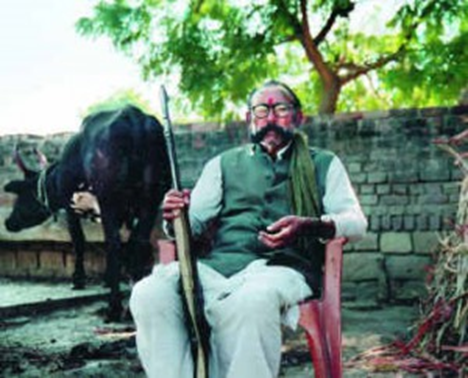
The title here, Dacoits on the Skookumchuck, makes perfect sense to a select group of English speakers in an area around Vancouver where the collision of English with Indian and Indian cultures – one being the native Chinook and the other being Hindi – makes it understandable.
Growing up in that environment, my tillicums (friends) and I knew a lot of Chinook words without knowing they weren’t normal English. We talked about the chuck or salt chuck (the ocean). We knew who was a mucky-muck (important, rich person) and so forth.
The area later gained a large immigration of South Asians, many working in the lumber business originally, but they soon integrated into the mainstream, bringing with them several of their own words. Zabardast! And lots of food words that everyone soon learned: pakoras, samosas, daal, rotis and more.
England had the same changes as waves of Angles and Saxons met Celts and then infusions of Vikings and Normans (Vikings who had lived in France). Each bringing linguistic change. And more kept coming.
When English speakers in England talk of boffins and wankers, most of us in North America have no idea what they are talking about. Much less get offended.
It looks to me like English is taking the route of the vulgar Latin. The languages both started out as single languages and then geographically started to evolve. In the Middle Ages everyone thought they were speaking Latin. Only when they travelled from Spain to Italy or Romania to France did they realize that people in the other lands had totally changed what they thought was pure Latin.
Over time, these Latin dialects became (and these are all legally recognized): French, Italian, Spanish, Romanian, Portuguese, Catalan, Galician, Occitan, Sardinian, Arpitan, Norman, Corsican, Romansh, Mirandese, Asturian, Aragonese and Leonese.
And lest we think this is the end of the proliferation, ask anyone who speaks any of the larger of these languages about dialects. The Sicilians have a hard time understanding the Tuscans; the Madrileños have trouble understanding folks from Caracas; and don’t get Parisians started on whether Quebeckers really speak French. Quebeckers even cringe at New Brunswick Chiac. All this happens even though they think they are speaking the same language.
English is the same. Few North Americans who watched Slumdog Millionaire understood the English well. I found myself explaining “tea-wallah” to my wife in the theatre (or should that be the theater?) As I mentioned, I grew up with a lot of South Asians.
Theories were that mass distribution of movies and music would create a consistency in English around the world as we were mass exposed to American and English English. But they haven’t.
On the contrary, local dialects and accents have added charm to media stories. I recall one Canadian commercial that was set in the province of Newfoundland and included English subtitles under the Newfie English dialogue so everyone could understand what the actors were saying. I could use the same for some Australian, British or Southern US dialogue.
The internet and technology seems to have carved out its own dialect of English as a kind of tech speak. Morphing into a combination of phonemes short-spelled – U R so hot! C U later! And so on. And new uses for old words. But it is ever changing. Understanding this evolution is part of the price for admission to popular culture.
That’s why I think that despite the mass, English will eventually break into various dialects and then these will be termed languages. In the future, universities may offer courses in Strine, Canuckish, maybe even Y’all-ese. As one of my Southern friends explained, the plural of “Y’all” is not “youse all” but “all y’all,” eh!
So the language we speak, English, is kind of a “dacoit” in itself. Taking, opportunistically, words and sayings from the seas of verbiage – wherever and whatever – and incorporating them into its basic structure. In all cases, the objective is to communicate between people. Sometimes that takes a little patience. N’est-ce pas.
Which gets me back to my title – it can be translated into “Thieves (dakoits or dacoits) on the angry sea (skookumchuck).” Which is what English speakers are as they steal words from the sea of sounds around them.
But, I have to add, the words “dacoit” and “skookumchuck” are considered pure English by the local folks who use them.