I spent more than a year working on Jell-O Pudding’s advertising in the early 1970s when I lived in New York. My job was to come up with new advertising directions, back ups to those already running, and also to help with new product development.
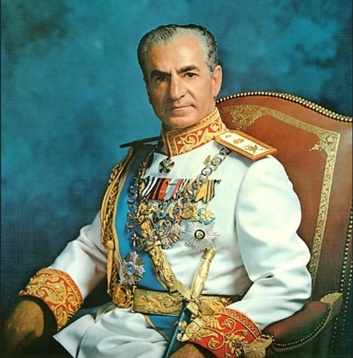
We got a new TV campaign running featuring Bill Cosby, developed new print ads, did a lot of development work on new TV commercials targeted at kids (Cosby ads were not allowed to run in Child TV programming), and a new back up print approach. None of these involved the Shah of Iran.
We had several new product initiatives running and had two sets of test markets with new products in each. Neither of these looked too successful.
I had an idea for another new product, actually, a new flavour. Thanks to seeing and sampling many of the Jell-O Pudding flavors, I noticed that many pudding flavours were similar to ice cream flavours (chocolate, vanilla, butterscotch, banana), so I suggested that we consider a pistachio flavour of pudding, instant and cooked versions.
The Product Management team agreed it might be worth looking into.
When you are the leader in a category, you want to flank your product line to prevent any competitor from getting distribution of their product that could fill a gap on the grocery shelf and take away some of your space or facings.
We went down to the General Foods plant in Dover, Delaware with the Brand Group to meet with the Product Development team – food scientist, production, purchasing, sales and packaging. Everyone is involved when you are trying something new; a problem can arise in an unanticipated place. The product development team had prepared some table top samples for us of pistachio pudding, but Purchasing said they had a problem. The samples tasted great. The issue was whether to include real bits of pistachio nuts in the pudding or not.
Seemed a simple problem; the purchasing department team told us that based on the volume we had projected, there were not enough pistachio nuts available in the world.
At that time, the majority of the world’s pistachio nuts were grown in Iran, with some in Australia. These days, California leads the world and the overall production of pistachios has boomed since the 1970s. In 2025, California alone produced 1.5 billion pounds of pistachios. Then the supply was quite limited.
When we were considering our pudding flavour, California had not yet had a commercial pistachio harvest. Trees take up to ten years to reach significant production levels.
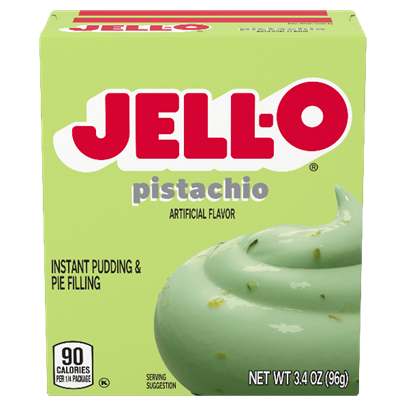
Who would have thought using real pistachio nuts in our little flavour extension of Jell-O Pudding would drive up the world price!
It seems the Shah of Iran had already committed to purchasing huge amounts of the Iranian pistachio crop for use in the Iranian school lunch program. At that time, pistachios were Iran’s second-most important export product, after oil and gas. Do we steal from kids’ lunches?
Our decision was forced upon us by the interconnected world markets and as a result we used ersatz nut pieces and artificial flavour instead of actual pistachio nuts.
I mention this to reinforce the scale and size of the US market and its impact on world commodities. The US is a very hungry, consuming market.
Everything in the world is interconnected. You draw on one area, another might suffer. The unintended consequences may by considerable.
So, the Shah kept his nuts.
We had a successful launch of our pistachio “flavoured” puddings soon afterwards. You can still buy these pudding products today. The Jell-O Pudding product is still there; but the Shah is not.
This also should give an insight into why so many packaged US foods have so many artificial ingredients. To produce the quantities and shelf stability necessary for the US market, manufacturers have to rely on food chemistry. While natural ingredients may be preferred, their costs, availability and stability sometimes mean that they are not practical or robust enough for the distribution system.
Strangely, a few years later, I was offered a job at an international agency in Teheran. I was interested in working internationally but it was a complicated visa arrangement to work in Iran. Soon after I ended up going to Venezuela in South America instead. I know how to choose a better war zone.