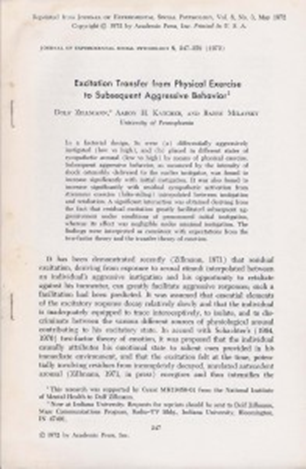
Necessity breeds invention. As a graduate student, one February I was reduced to living off of green beans and wieners. That motivated me and led to the publishing a highly cited study in the Journal of Experimental Social Psychology, with the help of a very kind professor.
As a poor grad student at the University of Pennsylvania, by the end of the first term I had literally (not figuratively, but literally) run out of money. By early February, I had exhausted all the holiday gift money I had received. I was broke. I went shopping with a friend and ended up buying 10 pounds of green beans for about 10 cents. They were cheap because the greengrocer at the Italian market in South Philly was going to throw them out at the end of the day. It was Saturday and he had no hope of selling them because they were closed on Sunday. Now I was all in on my grocery money.
That was about all that I had to eat for the next couple weeks. Not a welcoming thought. But necessity is the mother of invention, or so says Frank Zappa.
I went to Dolf Zillmann, one of the professors whom I wanted to work with. His work was in Social Psychology and I had taken a statistics course from him. I admired him, and asked him if he could hire me as a research assistant.
He told me he had funding, but could only use it if he had a study he could undertake. Then he provided me with a challenge: Come up with the methodology required to help understand a concept he was working on called Excitation Transfer. He took a few minutes to explain the concept and what he was looking for and sent me on my way.
Motivated by the promise of better groceries, something more appetizing than green beans, I hastily sketched out a scenario, building on previous psychology experiments I had done in undergraduate school. I wrote it up and brought it back to Professor Zillmann. The design was based on having subjects believe they were doing one study when they were actually doing another. He mused on it and declared that it would work. We tweaked the design a little, challenged it and then he hired me.
The end of that month I received a cheque for more than $30! Big cash for me in those days, and I was on my way to finer dining through March.
We had to write scripts so subjects all heard the same story, locate experimental machinery: a polygraph, an exercise cycle that could be controlled for work levels, a stethoscope, a manometer (the inflatable cuff that is put on the arm to measure blood pressure), and a machine that gave electric shocks to people’s wrists at adjustably controlled levels. We borrowed the polygraph from the Penn Dental School.
Once we were prepared, for the next couple months, I ran undergraduates through our methodology. Each one took more than an hour and they participated one at a time.
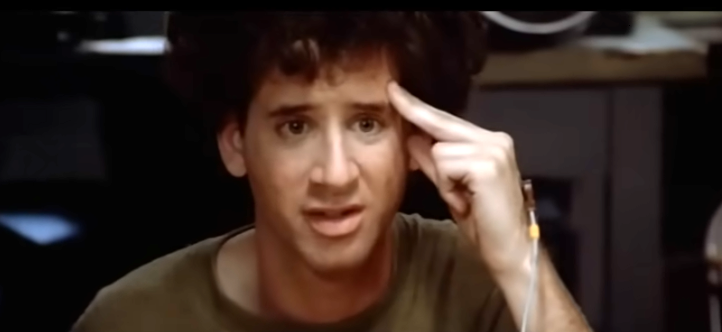
Some students had to be given electric shocks, some not. The shocks were irritating but nothing very painful. I tried it out on myself before we started. If you remember the scene from Ghostbusters where the student is shocked and spits out his gum, that was the same kind of electric shock. I was Bill Murray’s Venkman prototype as the experimenter.
During the course of the experiment, I carefully monitored responses and tallied the data. Plus I logged the earning hours that kept me away from falling back into my green bean diet.
At the end of the experiment, we ran statistical analyses and found that we had significant findings. The paper was good enough to get published in the prestigious Journal of Experimental Social Psychology. Dr. Zillmann was kind and supportive enough to include me as one of the authors. The study is still quoted to this day. A recent Google search showed more than 560 cited references. So we fed the social psychologists many times.
We all have flashes of adequacy once in a while.
So thank you Dr. Zillmann. Whenever I see green beans, I remember your kindness.