Anyone who has worked in marketing or advertising, particularly in packaged goods, has worked on a lot of new product ideas that were never a success in the market. Some products died in concept testing, some actually made it to prototype then test market in regional or local markets, and some made it nationally before struggling and admitting defeat.

I have worked on too many products to count that tried and sputtered. Here is a sample of some:
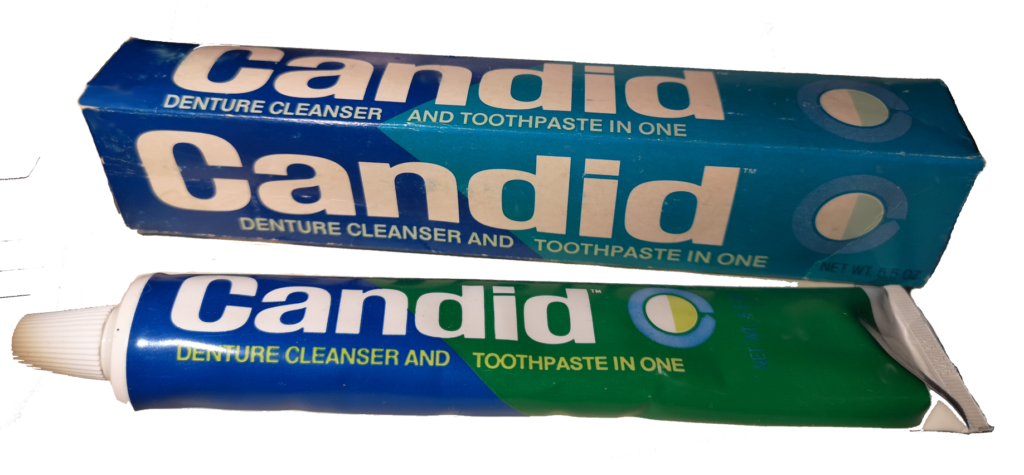
Candid denture cleanser and toothpaste in one, in the photo, made it to test markets in the US. Then it was then renamed Complete and tried again. Same poor results. It was made by Richardson-Vicks so the expertise and resources were there. Despite the fact more than 40 million in the US have dentures. Turns out though, folks preferred two separate cleaners if they had both teeth and dentures.
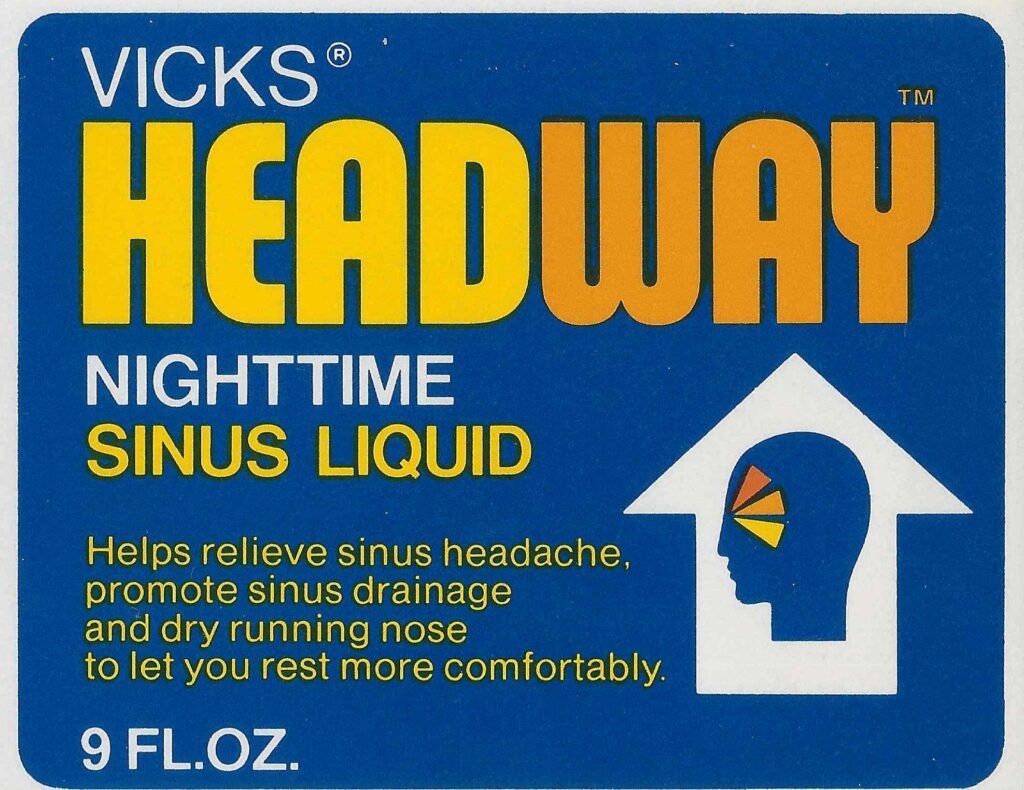
Headway Nighttime Sinus Liquid, also made by Richardson-Vicks, was based on the same concept as Nyquil, their highly successful multi-symptom cold cocktail. Headway was also a liquid, but was a multi-symptom nighttime sinus relief product. This alcohol based cocktail could really knock you out with an antihistamine and pain reliever.
The product made it to several US test markets. We fully produced many commercials for it with different selling ideas, at least six fully produced spots. On analysis, it turned out that targeting intense sinus pain and night time suffering was too narrow of a market to support the required volume. The product name was later used by the company on another night time sinus remedy, but this time as a capsule and that product made it to national release before fading away.
Prime Choice Steak Sauce was a product from Clorox Foods in the US that got to test markets, but did not generate enough sales response in an already crowded market to go national. It had a very nicely designed bottle, though.
Jell-O Fast ‘n’ Fancy was a General Foods line extension in the US for Jell-O pudding that contained a mix of nuts and crumbs to stack as a parfait with the pudding. While it died in test market, I remember a legal hurdle we had. The commercial featured actor, Cyril Ritchard, somewhat famous for playing Captain Hook in Peter Pan on Broadway. The commercial opened with Ritchard saying “One of my great joys in life is cooking…”; he then goes on to say that the new product made fancy desserts, fast. The lawyers required that we have a letter on file, signed by Ritchard, confirming that “One of my great joys in life is cooking.” And that was all the letter had to say.
We also did Jell-O Pudding line extensions, most designated by acronym because the names were too long. For example, there was JISSP (Jell-O Instant Single Serve Pudding), JTP (Jell-O Triple Pack) and, well you get the idea. The objective was to always have at least one new product in the pipeline; and one in test market. We also launched more flavours, such as pistachio. Some flavours worked; some did not. Adding flavours gave consumers more variety to increase frequency of use and gave brands more facings on the supemarket shelves.
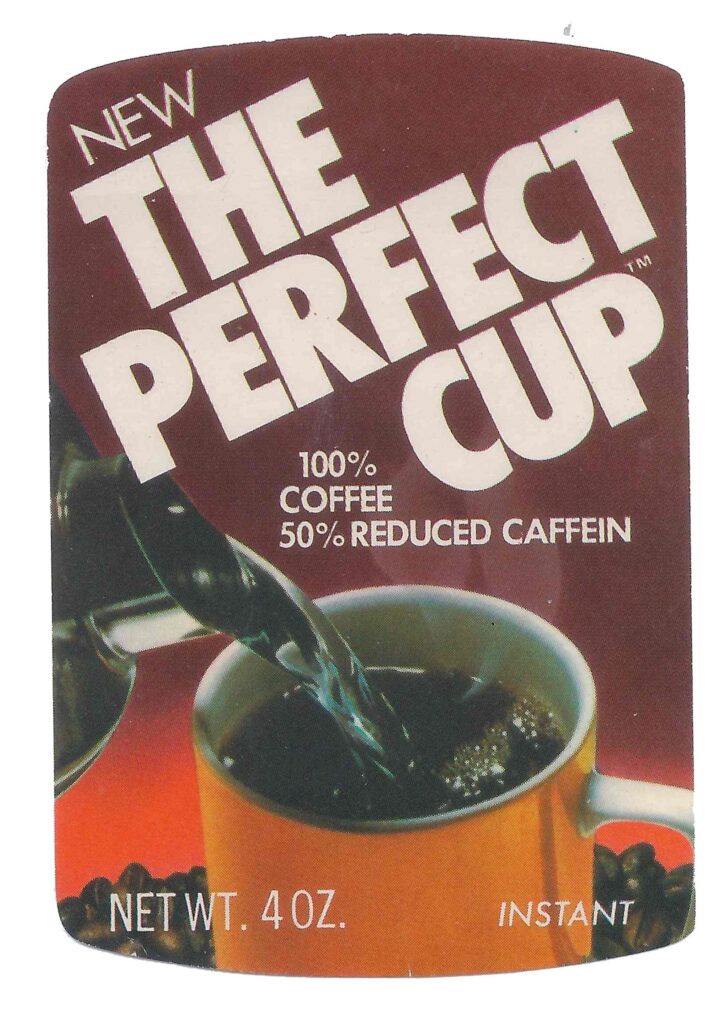
The Perfect Cup was a General Foods Canada product developed when the price of coffee skyrocketed. It was coffee mixed with the cheaper substitute, chicory, so it could be sold cheaper. Price is supposed to be important, but this product died based on taste — or lack of it.
Another chicory and coffee mix, Mellow Roast, sold for a few years and then slowly died. I had also worked on Postum in the US and have to say that, as a non-coffee drinker, they all tasted pretty bad. As mentioned in Overcome AD-versity, price is a weak foundation for a product since it can be matched or beaten easily. When the market adjusted to the price of coffee, sales tanked for pseudo-coffees.
When I worked with General Mills cereals in Canada, we had a constant revolving door of what we called “topical” cereals. These went from Strawberry Shortcake, PacMan, ET Cereal, and others that were launched with the intention of withdrawing them after about 9 months to a year in the market. They were based on a popular topic, movie, or theme that we didn’t expect to be “evergreen” or last for very long. They lasted about as long as a child’s attention span about a movie or toy. General Mills is still riding the topical train with recent introductions of Wicked cereals. The door keeps revolving.

There were also mainstream cereals like Clusters, Nature Valley Granola, and many others. In the ultra-competitive Ready-to-Eat cereal business, achieving a 1% share was an achievement and success. Pesky little Strawberry Shortcake kept on going for a few years, more than expected. Maybe the cereal actually tasted good! Some never stopped – like Count Chocula, Frankenberry and Booberry.
At that time, we were also launching new versions of Nature Valley Granola bars, in Clusters, Soft bars, and more flavours of each. The road to success through the wilderness for these products always led through a forest of chocolate chips. The more chocolate chips we added, the more likely the product would be successful. As we did this we wandered further and further from the original idea of granola being a healthy, “better for you” snack. Quaker beat us to fully enrobing a granola bar in chocolate and by that time telling a granola bar from a chocolate or candy bar was a challenge,
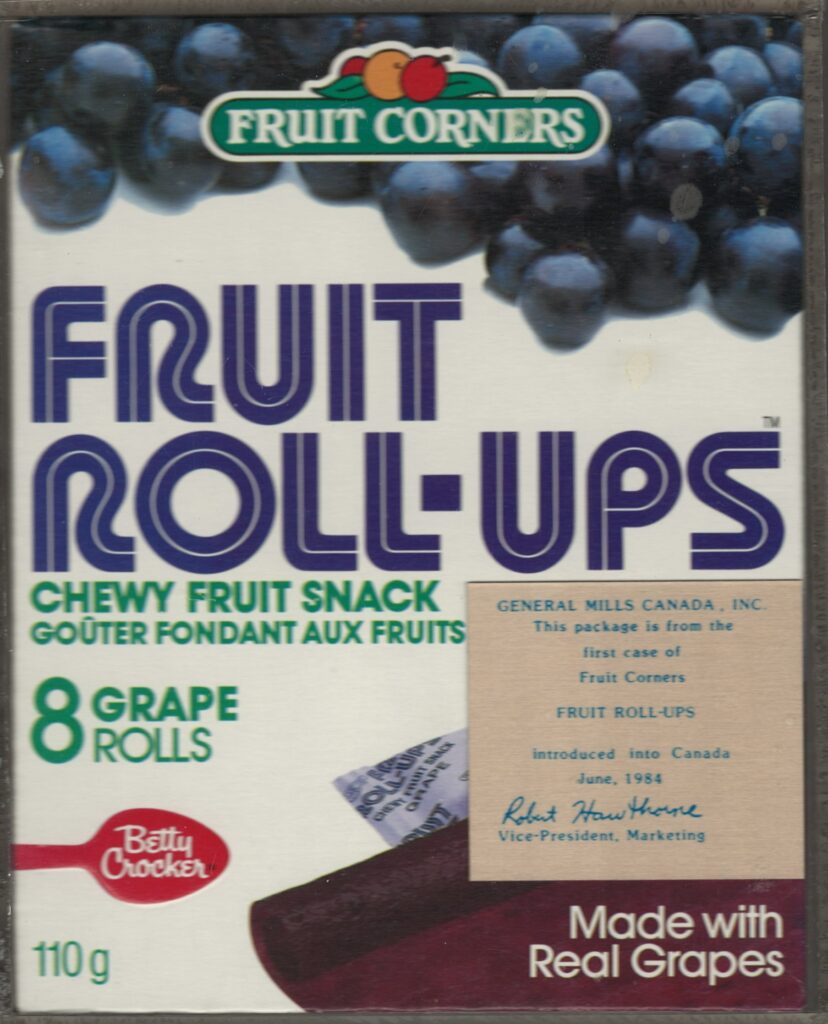
We also churned out a series of fruit leather products in all kinds of versions of Fruit Roll-Ups. I still have a box of product from the first case of Fruit Roll Ups for the Canadian market in 1984 (see left). It is encased in its lucite box; it may be preserved enough to still be still edible. There were other parallel lines – Fruit by the Foot, Fruit Bars, and so on.
This product is very successful, however, they still haven’t figured out how to put chocolate chips in it. There was a close try with Pudding Roll-ups which came in a chocolate flavour. It came and went within a year. No commemorative package in lucite for that one.
New product development is a lot of fun and takes a lot of imagination and resources. I have spent a lot of time, for my part, generating concepts for testing. Each needed a creative strategy and a consumer reason for being. Most fail. The results can be great, but more often – not so much.
No matter whether any one is a success or not, you have to keep trying to innovate hoping to satisfy changing market conditions, competitive environments, and consumer attitudes. That is what competition is all about. It never stops. If you never place your bets, you never win.
If you liked this, read more at Calexis.com