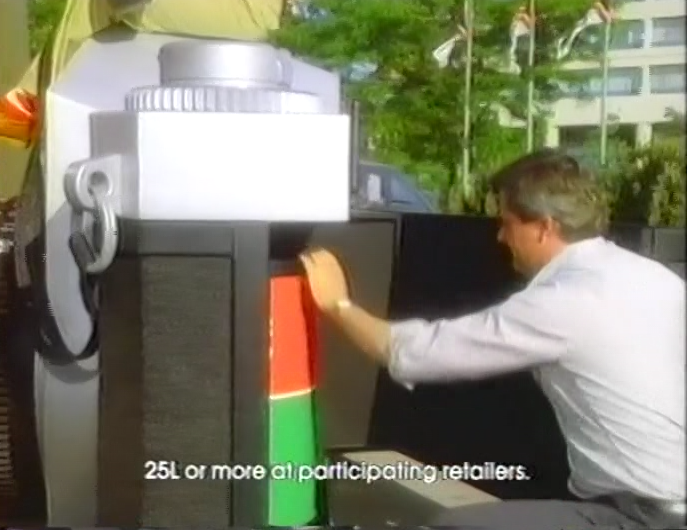
We had done a very successful Texaco promotion featuring Fuji Photo Film. The commercial was a winner at the International Film & TV Festival in New York. The commercial presented a man driving in to a Texaco station on a giant 35mm camera asking for a fill up.
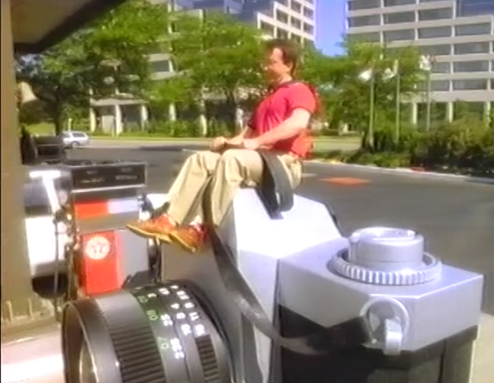
Customers received a free roll of Fuji 35mm film with a fill up. I made a point during the process to meet the Fuji Photo advertising manager, Arnold Dillon. After that, I would touch base with him from time to time building some credibility.
Fuji Canada headquarters were located in Montreal. On one of my frequent trips to Montreal, I discovered Arnold was flying to Toronto about when I was scheduled to come back. I changed my travel plans to be on the same plane with him so we could get to know each other better over an hour or more..
Our agency had already been noticed, now we needed to make ourselves relevant to the customer’s needs. Two key psychological steps toward a purchase decision as explained in Overcome AD-versity. I didn’t spend my time with Arnold pitching or selling, just establishing some expertise and trust while I gathered more information about their needs.
I learned that they were relocating their head office to Toronto very soon, as were most companies located in Montreal at that time. I also learned they were less than happy with Leo Burnett their current agency. I naturally softly suggested that they give us a chance to present our credentials if the need arose. He agreed but also said that their move was going to be their senior managers’ priority; we should stay in touch.
Some months after they relocated to Toronto, he called and told me they were ready to introduce a major new product, a new generation of photo film for Canada. They wanted to see what our agency had to offer. We scheduled some time for a presentation a few weeks into the future. Our agency sprang into action; we did some of our own focus group research to try to understand and differentiate Fuji from key competitor Kodak.
Our Focus groups had told us that Fuji was the film for action people to capture the excitement of life. Kodak, on the other hand, was for warm, soft family moments and memories. As simple (or semiotic) as it seemed, the green box of Fuji was understood by consumers to be for outdoor, action shots and the warm yellow and red box of Kodak was for skin tones, people shots, family memories, indoor shots. We put together a killer presentation. We were set to soar.
Our recent introduction of Pro*Stars cereal for General Mills became the core of our presentation as an example of a major new product introduction that was in Canada only. We developed it, we didn’t just follow up on an international introduction developed elsewhere.
Our presentation was to be made to five senior Fuji executives; there were two senior Japanese managers (President and Finance), their General Manager, Advertising Manager and Sales Manager. Great!
All the key decision makers in one room meant it was not just a “kick the tires” kind of meeting, but a serious look at a new agency. You read the cues to understand the situation.
Our team included our President Hank, our Media Director, Research Director, Creative Director, our focus group leader with me as the lead and MC. We were excited at the prospect of a significant piece of new business.
Our theme throughout was – Fuji = action; Kodak = family. This differentiation was something we built on. We were feeling confident.
Just days before our presentation, I got a call from Arnold telling me that the wife of one senior manager, a manager who would be in the meeting, had passed away. She had also worked at Fuji for many years, so all their senior people who were to be in the meeting would be at the funeral. The funeral conflicted with our scheduled meeting so the meeting would have to be rescheduled. I assured him that such an event was more important than any business. He could call me when things settled down and we would reschedule and be ready.
I had to tell our keyed-up team that the meeting was off. Our President took it hard; he wondered if Burnett had made a new offer to stop the review. Was I sure someone had died or were they just putting us off? My position was that people do not fake such things – he should stay calm. I trusted my relationship with Arnold.
A week or so later, Arnold called, apologized at the short notice for the cancellation and scheduled another date for our presentation.
Before the date arrived, we rehearsed to be ready again. The day came. We were ready. Half an hour into our presentation, things were going very well, I got to my key section. It focused on our successful new product launch featuring Pro*Stars cereal. As the lead on the Pro*Stars launch standing at the front of the room, I outlined our strategy positioning the cereal as a good source of protein.
At this point, one of the Fuji managers, at the other end of the long table, had a question. He asked whether Wayne Gretzky, as a role model, was the real reason for Pro*Stars’ success, rather than the product’s protein claim.
Hank interrupted and jumped into the conversation before I could answer. He said “You see Wayne Gretzky, but you are not the cereal buyer. What would your wife think?” Then Hank sat back in his chair thinking he had addressed the issue effectively.
That was when, as I was standing at the front of the room, my knees buckled.
I leaned forward on the conference table to steady myself. There was total silence in the room. I walked forward along the side of the table to be in front of where Hank was sitting, with my back to him. I leaned forward, looked straight at that manager who was now looking down at his lap, and asked him, “Do you have kids?” There was another pause.
He slowly looked up at me; it seemed to me to take forever before he answered, “Yes… Two boys.”
I kept eye contact with him and my back to Hank. I asked if his boys played hockey. He said they did. “Aha! they must be Gretzky fans,” I added. He smiled and nodded in agreement, now looking straight at me.
And then I continued with my presentation. slowly moving back to the front of the room while keeping my eyes directly on him as I spoke and retreated to my original position at the end of the table.
We went through our research, how we understood the positioning difference between Fuji’s excitement and Kodak’s memories. We talked about how we had the team ready and eager to work with them. I also reminded them of how we had moved a lot of Fuji Film with our award-winning Texaco promotion.
Hank had asked to do the closing remarks because he liked to “ask for the order” as he called it. Instead of just closing, he decided to stand up and tell us a story of some neighbours near his summer home. He was excellent at telling these little anecdotes but clearly had not read the brief or been paying attention during the presentation.
His neighbours’ cottage was burning down. Hank saw the smoke across the lake and went to see what was happening. He saw the father, who owned the burning cottage, run back into the flames, risking his life, and coming out with a battered old cardboard box. It was a box of family photos that Hank described as being so much more valuable than anything else his neighbour owned. It was the family’s memories.
As we left, Ron Smith, our Research Director, walked out with me. “Want to grab a beer?” I asked casually. It was nearing lunch time. “Sure,” he said. We often had lunch together, but I rarely drank anything more than a diet cola. He did a double take at the beer comment, looking at me carefully.
When we got to the nearby restaurant, he opened with, “What did you think of the meeting? Hank kind of blew it with the Kodak story at the end…. And what was that weird thing when you walked in front of him in the meeting. What was that about?” Ron was always astute and strategically oriented.
“Well, remember that we had to postpone the meeting.” I said.
“Yeah, someone’s wife died,” he replied quickly, and paused to think.
“Right,” I said, “and it was not the General Manager, or the Advertising Manager or either of the two Japanese managers.”
“Holy shit!” said Ron. “It wasn’t the guy that Hank that asked about his wife, was it? Oh crap… That’s why you walked in front of him. Oh my god! I wondered why there was that long silent pause…. Oh crap, we’ll never get the account. I thought what you wanted to talk about was Hank’s off strategy story at the end; it was totally about a Kodak moment.”
Two horrendous faux pas in one meeting, a meeting that we had worked for and waited a year for. What a disaster!

So naturally, we won the account.
Here’s a frame from our exciting, outdoorsy launch commercial. The Fuji brand is on the skier’s helmet.
We managed the business by keeping Hank far away from the clients. The story is a good reminder that rehearsal and acting consistently as a team is an important communication element. if you want to be seen as a cohesive team.
Gaining Fuji also helped us successfully gain the NEC account a year later. There are sometimes unseen consequences.
Another lesson here, take “Yes” for an answer when things look good, and stop talking.
If you liked this, read more at Calexis.com