Many people think that “Stooge” is just a term coined by the Three Stooges. Not so. There are stooges in advertising all the time. When a movie came out in 2012, the Three Stooges came back to the public’s top of mind attention.
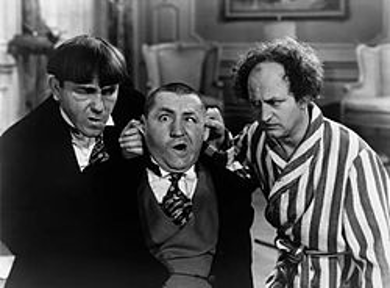
A stooge, by definition, is a shill, a confederate who acts as if he or she is one of the spectators but is really there to feed the lead actor, comedian or pitchman opportunities to look good. They were the plants in the audience for the midway salesmen or gamblers.
The three stooges got their start as supporting players to a singer/comedian. They bumbled about the background acting as slapstick straight men to the comedian’s comments. They were, in fact, his stooges.
They became more popular through their movie shorts and the comedian became long forgotten. Those shorts became TV fodder for years.
Other stooges have a long history in advertising. They are a lazy writer’s flimsy way to set up a sales pitch by eliminating the objections to a sale. The stooge expresses weak doubts that the sales pitcher can easily slam through. The stooge can also provide additional suggestions for product use or quality.
The same technique is alive and well in infomercials and on the home shopping channels. You seldom see shopping channels without a stooge in attendance.
In many of the old slice-of-life commercials, the stooge was a neighbour or friend who posed the easy-to-answer questions to the lead actor. The stooges were the pivot for the lead who had the sales pitch based on the creative strategy.
Stooges can be effective if the dialogue is written skillfully; however, this is rarely the case. With no stooge, one might use lame substitutes such as “everyone says” or “many people say” which are vague and not quantifiable.
The stooge begins, “Oh Madge, what are you going to do?” setting up the problem/solution format that has always been a favourite.
The response was the product promise and support. Sometimes with a cutaway demo. The stooge would interject weak protests that could easily be overwhelmed by the sales pitch and emphasize the sell points. A stooge allows the copy to become a dialogue.
The stooge can prod the presenter to provide more benefits and also to reinforce the price point.
Stooge (setting the reference price): These knives must sell for well over $100.
Lead: Well, we’ll sell them for less.
Stooge: Well they would be a bargain at $80.
Lead: Were going to offer a real bargain.
Stooge: You mean less than $80. That would be amazing!
Lead: How about $49.95!
Stooge: That’s impossible! Really?
Lead: But only for a limited time. Call now. (“Limited time” can be anything less than infinity).
The role the stooge is playing, here, is to establish a standard for comparison that makes the offer look even more appealing. The stooge can be a willing convert to the product’s proposition. This is the model for some of the least creative advertising out there with little credibility in the message. It might be a half step ahead of the yelling presenter shouting “Buy this now!”. The stooge sets the bar incredibly low for the lead actor/salesperson to leap over.
<OMG, I can’t believe you said that! It is so insightful!!>
It might work on the rubes on the midway, and it does seem to work on the TV shopping channels, places where people willingly go to be fooled . Places where you just need to make a sale and then walk away. Nyuk, nyuk. But it is hardly the basis for building a brand.
As to the Three Stooges, their comedy also set some pretty low standards.
If you liked this, read more at Calexis.com