Long ago people used to dry their clothes outdoors on a rope or wire called a clothes line. The clothes dried fine outside in the sunshine, maybe a little stiff, but fine and smelling like outdoors. But sometimes it rained. Or the wind blew the clothes off the line.
Washing the clothes was also a lot of work. So we invented washing machines, first with agitators, then with ringers, then ones that automatically washed your clothes. Convenience is an amazing way to get people to change technologies. We embrace it quickly before thinking about what problems may arise from it.
But drying your clothes…
Voila! We invented the automatic clothes dryer. It could dry the clothes by heating and tumbling them indoors. No problems with weather or nosy folks next door checking your underwear.
Problem solved with convenience. But not quite. There were complications. The tumbling, dryness and heat created a few problems: static electricity made clothes cling to each other, clothes were not soft, and the smell was of the detergent or scorching and not fresh outdoors.
So, the first compensating solution was Downy, a liquid added to the washing cycle at just the right time to soften clothes in the washing machine by coating them with long chain molecules to keep the clothes feeling soft and without static. The product was very successful with one of the great commercial strategic visuals – the Downy bottle dropping into a soft pile of towels and bouncing back.
However, it was inconvenient and frustrating to get Downy into the washer at the right moment. Washers later evolved to include a fabric softener dispenser to automatically add it at the right time, but it took quite a while. Before that came dryer based softeners using an impregnated sheet that released the softener when it was exposed to the heat of the dryer.
I recall watching some Bounce commercials with their creators Bernie Most and Walter Cohen in New York when we were all at Benton & Bowles. The commercials had what we called a catalogue of benefits. There were four: softness, static cling, fresh smell, ease of use. Strategically, no one in the marketing group could make a decision on the key benefit to focus on. As reviewed in Overcome AD-versity, making the decision on the one best benefit may be the hardest decision in developing a creative strategy. Also, convenience is a very weak benefit because it can easily be matched. But convenience was clearly the reason for being for Bounce.
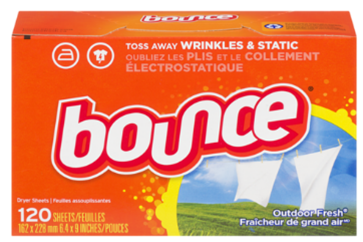
The Bernie and Walter made commercials based on the catalogue of benefits repeated each benefit, over and over, without explaining them, except visually. There were many benefits and they were pretty understandable. There would be a claim of fresh smell with someone sniffing the clothes as they were removed from the dryer, or separating the clothes without static cling while commenting “No static cling!” or someone caressing the clothes while exclaiming “Hmmm, soft!” As we have said many times, visual demonstrations are a lot stronger than verbal ones.
So is this article about laundry? Only as a metaphor.
What struck me was that almost every time we humans create a solution to a small problem, there are adjustments that need to come out of that adjustment. Unforeseen problems that must be solved to compensate for our solutions. It is a constant patchwork with tradeoffs.
We do it all the time with all kinds of technology. Every new technology complicates things when it seems to simplify some aspect of life. Climate change was an unintended consequence of our fossil fuel age, so it begat electric cars and solar panels as stop gap solutions.. Email let us communicate quickly, but soon we needed filters to stop all the spam.
Now we are on the threshold of AI. Everyone seems excited about how convenient it will be to write reports or papers, research all kinds of disparate data and many kinds of tasks. All done in a flash.
But where is the Bounce? Can we train AI to detect the fake from the real? Can it squeal on itself? We need the yang for its yin. We need an opposite yet complementary technology.
Hopefully AI will learn fast enough to provide its own guidance and be able to introduce the kinds of unexpected variables into expected solutions. So far the corrections that AI makes to my emails and word docs is more often wrong than right. Maybe AI is better left to the quotidien tasks that avoid invention.
Every new piece of tech requires constant updates and a steep learning curve. We adjust; we shrug and get on with it. Proponents say that AI adjusts itself. That remains to be seen.
Most changes need some Bounce; something external that adjusts the new technology and brings it back on track. To me, Bounce is a metaphor for that kind of course correction, a mechanism that eliminates the trade-offs.
P.S. I recall reading some of Bernie Most’s children’s books to my very young son. They were very good.