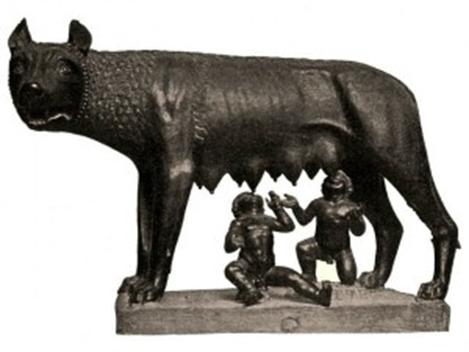
Nearly every civilization has origin myths to help explain how they started. Athens, Sparta and Rome had them and we learned these stories in school. Romulus and Remus and the she wolf gave Rome fighting strength and the need for struggle.
Nearly every native population has an explanation for how they came to be and why they are where they are. It gives everyone a shared consciousness and a shared set of values to build from since they can all look to their origins for guidance for the future.
The US origin myth starts from the Pilgrims who were rebelling against the church – they were severe Puritans who set the tone for the nation-to-be by being anti-establishment and fiercely individualistic.
The origin story says they came from England and were welcomed by the local Wampanoag people. History shows they mostly set off from the Netherlands and they, and others, brought sufficient pestilence to wipe out most of the North American population.
Don’t let details get in the way of a good story. Lessons learned: eat turkey on Thanksgiving. Define yourself, defend yourself, be an individual, and you can be a success. That inspires US citizens to bear arms and have a fear of any government involvement in everyday life.
For Australians, they trace origins to Botany Bay and the penal colony, while New Zealanders were shepherds not convicts. Think about the personality differences in their national personas and how they are expressed in everyday life.
In Canada, our origin myths are a little hazy. French Canadians feel they all descended from the earliest settlers. If you are of the “pure laine” and descended from this early stock, you have your own language and the Roman Catholic church plus you also seem to have the right to resent anyone who came later. You have stories of Jean Talon and the “filles du roi” – women shipped over to be wives of the colonists.
For English speaking Canadians, the origins are not so historic and not so clear. But the Canadian origin myth, as it is being rewritten now, involves our role as peacekeepers for the UN, our multi-culturalism, and our dualism with French Canadians. Plus hockey. That means working together is a good thing not a failing. It means accommodating others. But it also makes us less assertive, less loud and less boastful of accomplishments than our southern neighbours.
With companies it is the same. Many seem to crave an origin myth, something clouded in spirituality. And so they rewrite their own over time. Like how milkshake appliance salesman Ray Kroc made his deal with the McDonald brothers, or how Bill Gates and Paul Allen got the IBM DOS assignment to start Microsoft, while at Apple it was the Steves, Jobs and Wozniak, two hippies working in a garage created the personal computer.
What we don’t think of as much is how these origin myths, true or highly embellished, start to set patterns and establish trajectories for the enterprise that springs from them.
Microsoft still carries that big centralist core thinking while Apple is counter cultural from the top down. Their businesses evolved that way too. PCs are in the corporate suite while Apple populates the creative departments.
Apple has been moving more mainstream, but their trajectory may have already been set. There are more Steve Jobs in the Board Room stories now. They may end up being an iPhone, iPod, iPad or an iWhatever company with computers on the side but they will always have that counter-cultural imagery around them. That’s a good strategy because it attracts younger customer..
There are many origin myths that have served companies well. Calexis started in a fourth floor walk up office over a tavern. We were always nimble and prone to helping people climb the stairways to their goals.
Why do origin myths set corporate trajectories? It is an explanation of their corporate strategies. We are all product of our origins: our genetics, our families, our environment, our experiences. Why should companies be different? At least a company can create that origin myth.
A dynamic, visionary leader can change that trajectory, but it takes time to reinvent yourself from one thing to another.
Few are the companies like St. Joe’s that start out in paper and become land developers. Apple may be on this kind of journey from computer hardware to music sales and telephones.
Origin myths are often created after the fact to reinforce qualities that the organization wishes to embrace. For many organizations, they are not written down to be tested by reality checks. Since origin myths are so evocative of the organization culture, it makes good sense to include some part of the origin myth in your company’s history on its website.
If you liked this, read more at Calexis.com