The advertising industry glorifies cleverness and wit. Clever ideas are the ones that win at all the award shows. But clever can also lose the customer.
Sometimes folks in our industry use their cleverness to feel superior over the poor schmucks who are their target market. That lack of humility can turn off the target audience and cost brands sales.
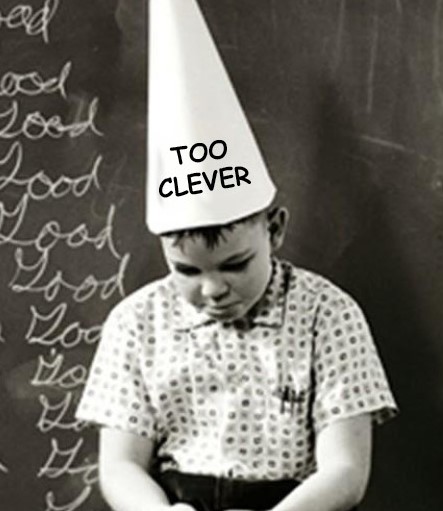
Artists can get obscure, exploring new paths of communication, requiring a commitment from the reader/viewer to understand the message. That commitment requires a desire and willingness from the viewer or reader to get involved into the art.
Ads are too ephemeral and fleeting to get the kind of target involvement needed. They are not created to be interpreted twenty years later. They need immediate recognition.
Clarity is one of the hallmarks of effective advertising as described in Chapter 5 of Overcome ad-versity. A quick example could be the wordy billboards one sees from time to time. An audience driving by at high speed watching the traffic neither reads nor thinks too much about the poster.

The poster has to communicate in a flash if it wants any chance. Read about why a maximum of seven words is the limit. Fewer words is even better.
Don’t make the words too cryptic or clever or you have squandered the opportunity. Make them clear and memorable, like this two word billboard that helped Pioneer sell its very high octane gasoline. They had already committed to a cowboy motif in their advertising. The word play is edgy, but even if taken without the secondary meaning, the message is clear.
Advertisers are not artists pursuing art for art’s sake. We are professional communicators translating our clients’ objectives into advertising and marketing communications to reach their potential buyers.. Getting the message through is the goal.
I admit, as an ad professional, I do like clever stuff a lot. But I also know when it misses the mark by a beat or even a half of a beat. If we are looking at concepts and all our folks don’t get the message immediately, we usually forget that potential concept. The idea went past clever and became cryptic.
Our job is to serve up motivating information to our audiences, not get them to consider, examine and work too hard to get into the message to get the point.
Why? Well, our messages compete with a cacophony of other messages daily for our target’s attention. And people generally don’t care. Simple. Memorable. Not requiring too much decoding.
Our goal is to be provocative (get their attention), clear, persuasive and compelling (get action). These are the key goals outlined in Overcome AD-versity. A poster, such as a one for transit can have more information because the viewer has time to look at it. But the short clear part of the message should do the work.
Clever and entertaining are sometimes part of being provocative and memorable – but not always.
It would be easy for me to pick on a few ads that are so clever they are cryptic. As someone who has written so many, I often see where the writer was trying to do…but never arrived.
I personally get confused at all the drug ads that assume you know what the darn drug is supposed to do, as they rattle off the horrendous side effects. But I am not a medical groupie and don’t know. These advertisers are escorting me out of their target group, whether I should be in it or not. If I don’t understand the point of the advertising, I move on to look or hear something else, ignore and forget about the ad. You had a chance Mr. Advertiser, but you lost me.

Making a dull, every day product interesting is the highest challenge for creativity. Almost anyone can make a feel good commercial about a social cause. The target is already feeling emotionally positive about the topic. But make a great commercial about a dull functional product — now that takes real creative talent.
The downfall of being too clever is that it not only confuses your audience, it can alienate them. True the ones who “get it” think you are their clever buddy. But when that is too few, you lose. Too clever might as well be too stupid.
If you liked this, read more at Calexis.com